

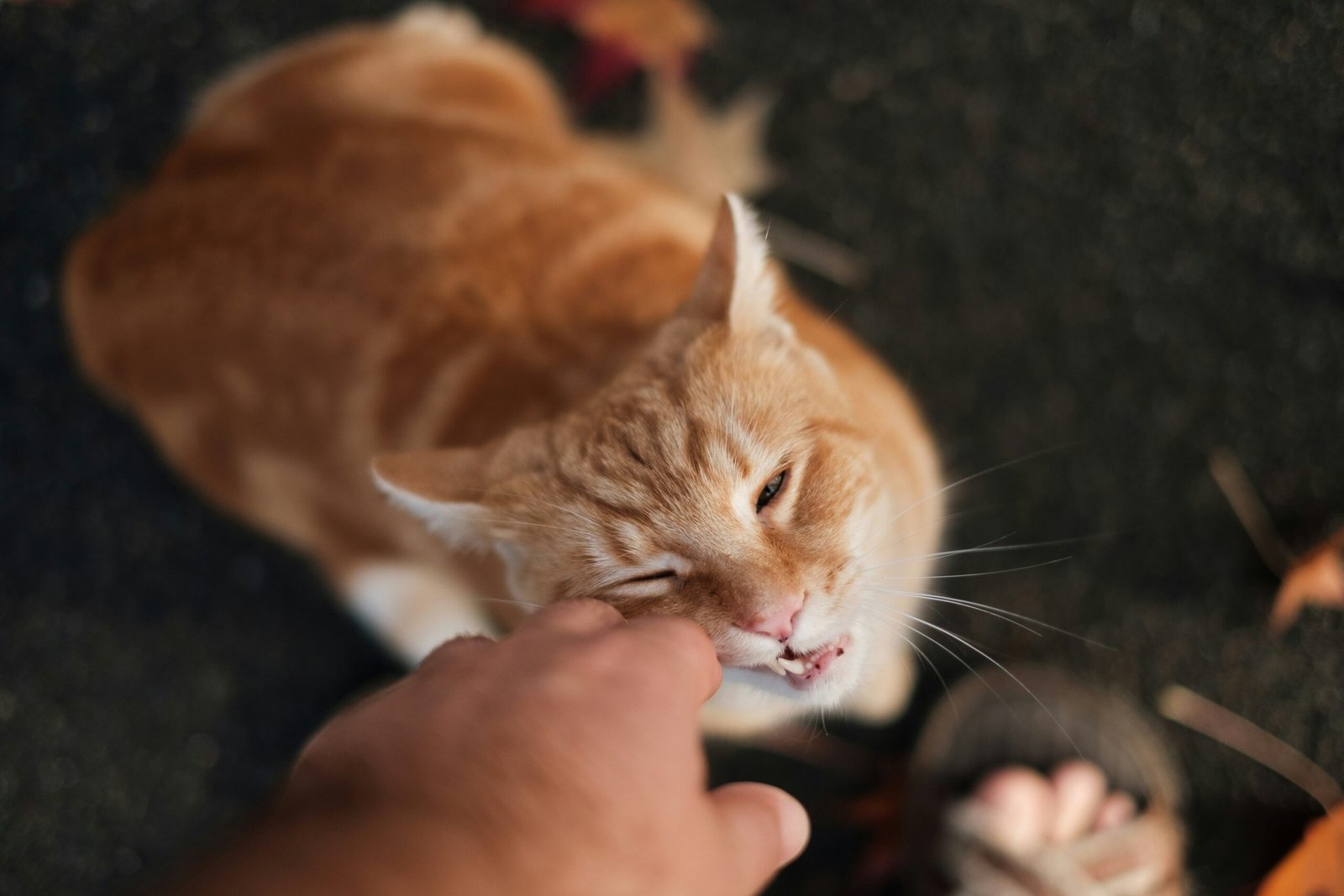
There is nothing as startling as a gentle cat bite when you’d swear your cat was just happy sitting next to you on the couch (or in your lap). Suddenly, after a minute of happy purring, it occurs to you that your cat is playfully trying to take a piece of flesh off the tip of your finger. When a cat gives you a soft, non-aggressive, non-terrified bite, you can probably be quite sure it’s actually trying to “say” something instead of “eat” you!
Cats also use their mouths as the do-everything exploration tools we have come to know, as well as communicating with them. Therefore, a soft nip from your cat may in fact be playing, affection, exhilaration, overstimulation, and even the prompt to stop touching that particular area for the time being. Context and your cat’s body language is your key to identifying the type of gentle cat bite you are receiving.
Pay attention to the tail wiggles and ear positions.
Also, keep a general eye out for whether your cat appears playful or aggressive (if they bite out of aggression, chances are the bite won’t be soft, but it can be the initial reaction. When this happens, remove yourself from play!).
What Does a Gentle Cat Bite Usually Mean?
If you’re wondering why does my cat bite me gently out of nowhere, a gentle bite is generally a controlled contact with the teeth that does not appear intended to cause injury. Cats may use this behavior during social interaction, play, grooming, or feline communication.
The ‘gentle nibble’ and an aggressively threatening bite are not the same thing. Signs of a cat being genuinely threatened to some extent would involve huffing, growling, swatting, arching its back and blowing up the fur and flattening its ears. Aggressively biting cats will likely also have some or all of these behavioral cues, and will try to get away or hit you. They bite to hurt or make you get off, not to express the soft affection that the gently biting cat shows by contrast.
Nevertheless, we don’t want to condone all the little gentle nibbles; some can still be too much if done at enough intensity, and some cats that nibble gently also at times want to take more of a bite. More than judging whether an behavior is “good” or “bad,” consider why the cat is nibbling gently and how it feels to you at that time.
Why Does My Cat Bite Me Gently Out of Nowhere?
The behavior may seem completely random to you, but cats often give subtle signals before they bite. You may have missed those signals because they can be brief or easy to interpret incorrectly.
Common reasons include:
- Your cat is being playful.
- It is showing social affection.
- Petting has become overstimulating.
- Your cat wants the interaction to stop.
- It is seeking attention.
- It is reacting to excitement.
- It learned that gentle biting gets a response.
- It is exploring with its mouth.
- Stress or fear is affecting its behavior.
- Pain or illness is making handling uncomfortable.
The same cat may bite gently for different reasons at different times. Context matters more than the bite itself.
Your Cat May Be Showing Affection
Some cats use gentle mouthing as part of friendly social behavior. A cat may softly nibble your hand, fingers, arm, or even your hair while sitting close to you.
If you’re wondering why does my cat bite me gently out of nowhere, this behavior can resemble the gentle grooming interactions cats have with one another. Cats may lick, nibble, or groom members of their social group, so a soft bite can occasionally occur during an affiliative interaction.
Cats expressing affection typically have open, relaxed body language. This may be accompanied by purring, kneading, rubbing, sitting at the leg, or generally sitting in a lax manner.
A gentle nip, which the cat returns with petting, is a very different statement from one that the cat quickly follows by scampering off with stiff posture.
Just because a cat is purring does not guarantee that the nipping is an expression of affection. Context is key to knowing what the nip is conveying.
Overstimulation Is One of the Most Common Explanations
A cat may want to be petted and then unexpectedly, decide that it has had enough. That happens when the repeated touch begins to irritate or over-stimulate the cat. A cat usually only allows people to pet it for so long, but it will only last until it has had enough. When someone has reached their tolerance of being petted, the switch may appear sudden to the people it happens with because, again, the warning signs are more subtle than they would be to other people, not the animal, nor with a person but, the animal!
Watch for signs such as:
- Tail flicking or thumping
- Ears turning sideways or backward
- Skin twitching along the back
- Increased muscle tension
- Sudden staring at your hand
- Moving away slightly
- Stiffening the body
- Rapid changes in pupil size
If these signs appear, stop petting and give your cat some space.
A gentle bite in this situation may essentially mean, “That’s enough.” Respecting that message can prevent the interaction from escalating into a harder bite or scratch.
Where you are petting matters
Some cats will have particular spots they don’t like you to touch. Depending on your individual cat these can include the belly, lower back, the tail base, paws, and legs.
You cat might love you to stroke its face but hate being stroked on the tummy. If your cat nips every time you pet the same spot it is worth keeping an eye on.
Your Cat May Be Trying to Play
Play biting is common, particularly in kittens and younger cats.
Cats naturally practice behaviors such as stalking, pouncing, grabbing, and biting during play. A hand that moves quickly can become an especially tempting target.
You may notice playful body language such as:
- A crouched posture
- Sudden pouncing
- Quick movements
- Chasing
- Pawing without obvious hostility
- Dilated pupils
- An alert but playful posture
The problem is that allowing a cat to repeatedly use human hands as toys can teach it that fingers and arms are acceptable targets.
If you’re wondering why does my cat bite me gently out of nowhere, instead, redirect the behavior to an appropriate toy. Wand toys, lightweight toys that can be chased, and other cat-safe play objects allow your cat to express normal hunting behaviors without turning your hands into part of the game.
Attention-Seeking Can Also Trigger a Bite
Animals and humans both learn from the outcomes of their actions. For a cat, a sweet little love bite that successfully evokes a visual of you looking at the cat, or produces words, and an interaction such as the response of shifting of your hand or initiating playtime, might quickly evolve into an effective, albeit subtle, way to garner attention. Don’t, however, anthropomorphize the action and assume the cat is being conniving like one of us; she is simply learning that if she does the one thing, the other immediately happens as requested.
This is why sometimes a cat seems to use as “sweet love nibble,” only for you to look her over, then immediately pet her.
A predictable and favorable outcome such as interaction with her will train this particular response as well. Instead of waiting until the sweet love nibbling turns into a more persistent attempt, try interacting with a bit ahead of time: provide for scheduledplaytimes, have a new electronic playtoy available, or provide positive attention regularly when you don’t need so much focused work and can entertain your friend.
Some Cats Bite When They Become Excited
Increased excitement can drop your cat’s behavioral threshold. Your cat might be overstimulated when playing with you or with another cat, viewing birds out a window, welcoming you home after a long absence, or expecting dinner. This bite can be weak initially and develop strength if excitation continues.
This is one reason why watching the general intensity level of interaction is important.
If you cat is escalating his intensity levels you need to redirect your cat before you end up bitten. Shorter, more punctuated playtime sessions may help your cat regulate the excitation.
Could Your Cat Be Saying “Stop”?
Sometimes a bite is a boundary.
Cats do not always communicate discomfort by immediately walking away. A gentle nip may be a warning that your cat no longer wants to be touched, held, or restrained.
This is especially relevant if the bite happens while you are:
- Picking the cat up
- Holding it in place
- Brushing it
- Trimming its nails
- Touching its paws
- Petting it repeatedly
- Moving it away from a preferred location
If your cat consistently bites during a specific activity, look for a way to make the interaction less stressful.
For example, instead of forcing a long grooming session, you may be able to break it into shorter sessions and reward calm behavior.
Pain Can Cause Unexpected Biting
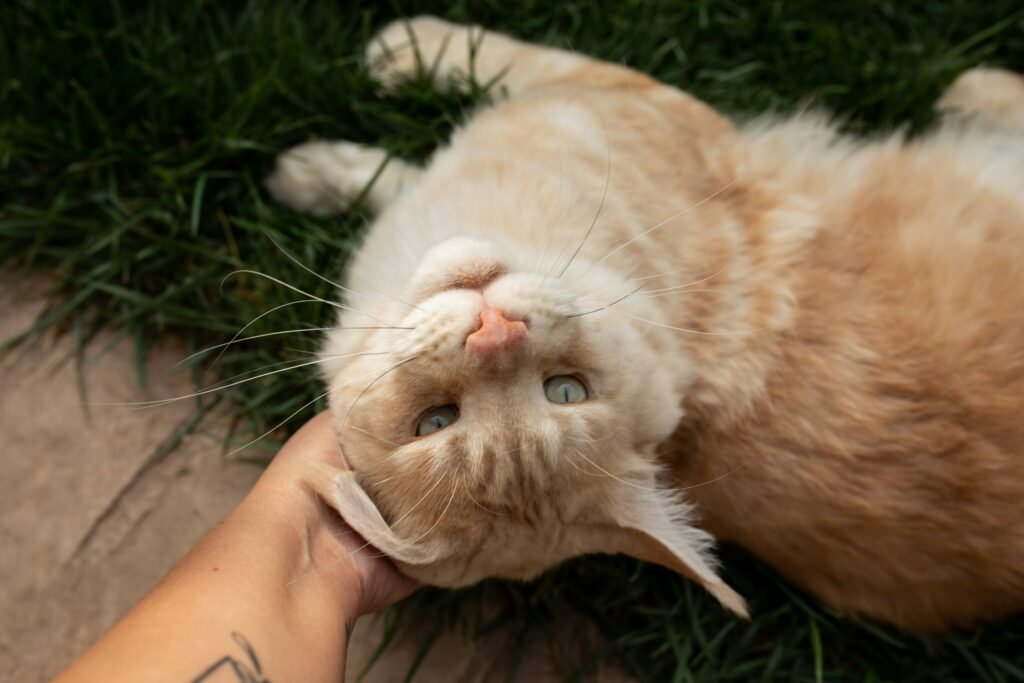
A new, abrupt change in biting behavior is one I think people tend to ignore too much, especially when your cat tolerates grooming and stroking previously. Your perfectly happy cat could react by biting because it hurts. You touch his side and he bites you.
Every time.
Then something on his side hurts and he is defending it.
If you’re wondering why does my cat bite me gently out of nowhere, possible sources of discomfort can include dental problems, injuries, skin irritation, arthritis, or other health conditions. Cats are also skilled at hiding signs of illness, so behavioral changes can sometimes be among the first things an owner notices.
Watch for other changes such as:
- Reduced appetite
- Hiding more than usual
- Changes in grooming
- Reluctance to jump
- Limping
- Changes in litter box behavior
- Vocalization during handling
- Reduced activity
- Unusual irritability
A new biting pattern combined with other behavioral or physical changes should be discussed with a veterinarian.
How to Read Your Cat’s Body Language
The best way to understand a gentle bite is to examine what happened before it.
Relaxed body language
A relaxed cat may have loose muscles, neutral ears, a calm tail, and a comfortable posture. Purring, kneading, rubbing, or settling beside you can also accompany friendly interactions.
Overstimulated body language
An overstimulated cat may become increasingly tense. Tail flicking, ears rotating backward, skin twitching, and sudden attention toward your hand can signal that the interaction should end.
Fearful or defensive body language
A frightened cat may crouch, flatten its ears, widen its eyes, puff up, hiss, growl, or attempt to escape. A bite in this context should not be interpreted as playful affection.
Playful body language
Play often involves quick movements, crouching, chasing, pouncing, and grabbing. The cat may appear highly alert but not necessarily fearful or defensive.
Learning these differences can help you respond appropriately as part of better cat care instead of reacting to the bite alone.
What Should You Do When Your Cat Gently Bites You?
How you respond can affect whether the bites happen again.
Overstimulation bite. If you think the bite is due to the cat being overstimulated, stop touching your cat and give it space. Punishing a cat after it has tried to communicate a limit doesn’t serve the cat.
Playful bite. In this situation, you should redirected the cat toward an appropriate toy. Try to move your hands away rather than play into the biting by wrestling with your cat.
Attention-seeking bite. Don’t fall into a cycle of rewarding biting with attention, and make sure the cat learns that the most effective way to get your attention isn’t to bite you. Reinforce and rewarding appropriate, calm behaviors.
Consistency matters. Cats get confused if you don’t encourage the behavior on the same days and discourage it on others.
A Simple Step-by-Step Way to Handle the Behavior
When your cat gives you a gentle nip, use the following approach:
1. Stop and observe
Pause instead of immediately reacting. Look at your cat’s ears, tail, posture, eyes, and overall behavior.
2. Identify what happened immediately before
Were you petting, playing, picking the cat up, brushing it, or simply sitting nearby?
3. Stop the activity if your cat appears overstimulated
Give the cat a chance to move away and settle down.
4. Redirect play biting
If your cat is energetic and playful, use a suitable toy rather than your hands.
5. Look for patterns
Keep track of when the bites occur. A pattern may reveal a specific trigger.
6. Check for changes in health or behavior
If the biting is new, unusually frequent, or connected to apparent pain, contact a veterinarian.
This approach focuses on understanding the behavior instead of punishing the cat for communicating.
Common Mistakes Owners Make
Pulling your hand back suddenly. Quick movement can initiate a chase/hunt instinct, and encourage the cat to bite/hold.
Pushing the cat away forcefully. Physical punishment could cause stress to and fear of your cat and have long-term affects.
Using your hands to play is a problem too. Even if a kittens sharp little teeth do not inflict a lot of pain, as the kitten grows it may become much more difficult to stop biting at.
Not heeding warnings, is another of the common pitfalls owners make. A quick twitch of the tail or twitch of the ear may not look like much but could happen before something more significant.
And finally-new behavior is not always behavioral-the sudden change in the cat’s personality could potentially be linked to an underlying illness or pain.
Why Punishment Usually Isn’t the Best Solution
Punishing a cat for biting can make the situation worse, particularly if the bite is connected to fear, overstimulation, or discomfort.
A cat may not understand punishment in the way a person expects. Instead, it may associate your hands, your approach, or a particular environment with something unpleasant.
That can damage trust without addressing the reason for the biting.
If you’re wondering why does my cat bite me gently out of nowhere, a more useful strategy is to identify the trigger, recognize early warning signs, and change the interaction before the bite occurs. Reward calm behavior and provide appropriate outlets for play and attention.
When Should You Talk to a Veterinarian?
Not every gentle bite requires medical attention. But a veterinary evaluation is appropriate if biting represents a noticeable change in your cat’s normal behavior or appears connected to physical discomfort.
Consider contacting a veterinarian if your cat:
- Suddenly becomes unusually irritable
- Bites when a particular body area is touched
- Stops allowing handling it previously tolerated
- Shows changes in appetite or drinking
- Hides more than usual
- Has trouble moving or jumping
- Changes grooming habits
- Displays other signs of illness
- Progressively escalates from gentle nipping to harder biting
A veterinarian can assess potential medical causes and help determine whether cat health concerns or behavioral support are also appropriate.
What If the Bite Breaks the Skin?
Even what feels like a quick bite may result in a puncture wound. Cat bites must always be respected. There is the risk of bacteria in their mouths entering the skin.
Wash any wounds that break the skin with running water and soap straight away. Medical advice should be sought if the wound is deep, painful, swollen, becoming redder, warmer, starts weeping or shows other signs of worry. Further guidance might be required as to your immune response and medical history in addition to the site and nature of the wound.
Frequently Asked Questions
1.Why does my cat gently bite me and then lick me?
A cat may alternate between licking and gentle mouthing as part of social interaction or grooming-like behavior. The meaning depends on body language and context. If the cat remains relaxed, the behavior may be affiliative, but a bite accompanied by tension may indicate that it wants the interaction to stop.
2.Why does my cat gently bite me while I’m petting it?
Your cat may be enjoying the attention but becoming overstimulated. Watch for tail flicking, skin twitching, ear changes, body tension, or your cat turning toward your hand. Stopping the petting when these signs appear can help prevent the interaction from escalating.
3.Is a gentle bite from a cat a sign of affection?
Sometimes. Some cats use gentle mouthing during friendly social interactions, but a soft bite can also mean play, excitement, overstimulation, or a boundary. The surrounding body language is more informative than the bite itself.
4.Why does my cat bite me gently when I stop petting it?
Your cat may be asking for more attention or trying to restart the interaction. It may also be excited by the change. If the behavior becomes frequent, offer attention or play at appropriate times and avoid teaching the cat that biting is the only reliable way to get a response.
5.Should I let my cat bite my hands during play?
It is generally better to use toys rather than hands. Allowing hand biting during kittenhood or play can teach a cat that human fingers are appropriate targets. Redirecting the behavior to toys creates a clearer and safer boundary.
6.Why did my cat suddenly start biting me?
A sudden behavioral change can have several causes, including stress, changes in the environment, altered routines, overstimulation, or pain. If the behavior is persistent or accompanied by other changes in appetite, movement, grooming, or mood, a veterinary evaluation is appropriate.
Final Takeaway
Understanding why does my cat bite me gently out of nowhere starts with looking beyond the bite itself. Sometimes an apparently ‘mean’ nip from your cat is just your cat having fun, being affectionate, excited or trying to get you attention. However it can also mean your cat just wants to be left alone so watching for body language and the situation can tell you a lot. There is no need to punish a nibbing or biting cat, it’s often better to simply cut short the interaction if you feel it is becoming too stimulating.
You can redirect an excited or playful nip onto a suitable toy to chew or a safe thing to “attack”.
By observing your cat patiently you will soon become aware of when you cat has “had enough”. If a nip is of a sudden new type or increased level of force, especially where it also is associated with pain or distress you may need to get the cat looked at by a vet.
CONCLUSION
It depends very much upon the context as to whether or not that soft cat bite is playful, an attempt at grooming, or a bid to get your attention again. Sometimes it means your cat has had enough of the cuddling/handling and finds their only way of stopping the activity is with their mouth! Simply look at your cat’s body language: are its ears back, its tail twitching or thumping wildly on the ground?
Take a look at its stance and attitude, and adjust what you are doing if it looks uncomfortable, angry or over-excited.
Never punish your cat and if its play-biting gets out of hand give it a toy to redirect its frustration to. It may be useful to consult your vet if this type of behavior occurs very often suddenly and is more forceful, accompanied by pain, illness or any other abnormality. Eventually, you will find these small nips easy to interpret.








