

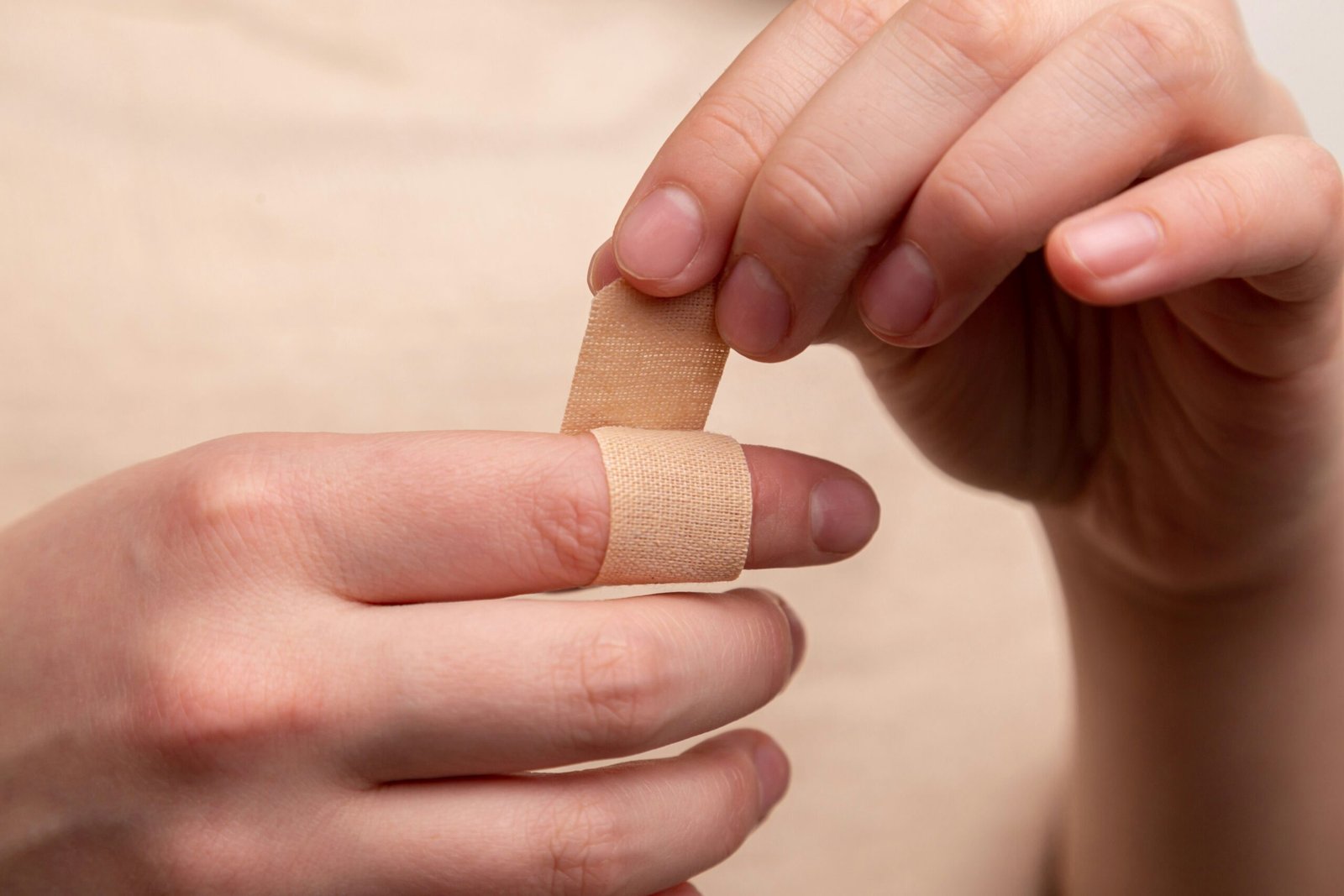
The pain in your finger starts with a pretty simple and small splinter. Why does a splinter sometimes hurt so much? Sometimes you may even have a splinter in the nail bed below your fingernail. Here’s how to tell when your splinter is deep, when it’s in your fingers or even just under a layer of skin.
Knowing how to get a splinter out of your finger starts with looking at the splinter rather than immediately trying to dig it out. Consider the size, depth, shape, and where it is. For example, a visible piece of wood may be easier to grip with clean tweezers. A deep or invisible splinter is generally best left to a healthcare professional. The American Academy of Dermatology advises washing the area, examining the splinter, sterilizing tweezers if you see part of it, and seeking medical help for large or deep pieces or if you notice infection.
What to Do Before Removing a Splinter
Before learning how to get a splinter out of your finger, prepare the area and your tools. Well prepping minimizes the urge to keep probing a stubbornly hidden splinter.
Wash your hands with soap and water, then wash the finger that has the splinter. Gently dab the area with a clean towel until it is dry, taking care not to scrub the skin. Use bright lighting so you can see the splinter and if it is tiny, a magnifying glass can help you see the size and direction, following proper splinter removal guidance.
If you are going to use tweezers, you want to clean the tips. The AAD states that your tweezer tips should be cleaned with rubbing alcohol before you use them. You don’t want to add more debris or bacteria into an area of broken skin.
Check whether the splinter is a little protruding, slightly beneath the surface, or wholly embedded. The course of action you should take varies, depending on what you find.
First, Identify What Kind of Splinter You Have
Not every splinter should be approached in exactly the same way. A small fragment protruding from the skin is very different from a deep splinter that cannot be seen.
| Splinter situation | What may be appropriate | When to stop |
| Part of splinter is visible | Clean tweezers | If it breaks or cannot be grasped |
| Tiny, superficial splinter | Good lighting, magnification, tweezers | If you cannot clearly locate it |
| Completely beneath the surface | Careful exposure may be possible if shallow and clearly visible | If it is deep or difficult to access |
| Deep or invisible splinter | Professional evaluation may be safer | Avoid blind digging |
| Under a fingernail | Extra caution | Seek help if difficult to access |
| Increasing redness, swelling, pain, or pus | Medical evaluation | Do not keep attempting removal |
The crucial difference is the difference between a splinter which is visible but cannot be grasped and a splinter which is not visible. Better illumination or magnification may be able to assist you with the first problem. Repeated pricks will probably not help the second problem safely.
How to Get a Splinter Out With Tweezers
If a part of the splinter protrudes, tweezers are generally the easiest method.
Start by sterilizing the skin and your tweezers. Place the tips of the tweezers at the exposed end of the splinter without pinching the skin. Get a firm hold of the splinter and carefully pull it out in the same direction it entered the skin.
Avoid squeezing the skin around the splinter. This can make it break apart, making it more difficult to remove, according to the AAD.
For instance, say a splinter of wood has penetrated the side of your fingertip and a fragment is still sticking out. Assuming you have a good grip of the tip of that splinter, you usually don’t need to make the opening larger; the gentle pull along the route it entered is better than trying to dig out your own skin to get it.
Once the splinter comes out all the way, examine it. If it appears that the full splinter has been removed, go to wound care instead of trying to dig around for more.
How to Remove a Splinter That’s Under the Skin
Sometimes, it can be under the surface but close enough to be seen. That’s where things get a little more tricky.
AAD proposes a small needle to gently dislodge an edge of the embedded splinter, then pliers to extract it. Proper sterilization of the needle and prongs of the pliers is recommended, and clear vision makes the process easier.
Medline Plus advises that you should loosen the skin away from a visible splinter using a sterilized pin or needle before pulling it out with tweezers.
On the other hand, this does not imply that you’ve got to dig out every deep splinter at home. If you can’t see exactly where the splinter is, puncturing it multiple times can cause more injury without actually dealing with the problem.
If you are wondering how to get a splinter out of your finger when it is buried, the safer question is first: Can I clearly see and safely access it? If the answer is no, stop rather than escalating the amount of digging.
How to Get a Tiny Splinter Out of Your Finger
Minor slivers can be just as, if not more, annoying than major slivers, because they’re difficult to spot and difficult to grab hold of.
Begin with adequate light and, if needed, magnification. Observe from various perspectives without pushing or squeezing in the beginning. If you see a small tip, cleanse tweezers could be adequate.
Do not keep pinching the end of the finger again and again trying to drive the piece upward. This causes irritation of the entire area and could snap a delicate splinter.
If you’re dealing with something small, rather than a small piece that you can’t determine the location of, it’s a whole different story. If you don’t know where it is, the more you probe, the more you could cause damage.
How to Remove a Deep Splinter at Home
The phrase how to remove a deep splinter at home appears simple and easy; however, deepness varies in terms of the safety of home remedies.
If the splinter just under the skin and can be seen, with exposure, it may be worth trying to remove it at home. However if it is genuinely deep, entirely unseen, really painful or in an awkward place it’s unlikely a home removal will be wise.
According to Medline Plus, a healthcare professional should be consulted if the splinter is deep. The AAD also states that a healthcare professional should be consulted for very large or deep splinters.
A good general rule: Don’t keep enlarging the wound trying to find something you can’t see. Having the wound professionally debrided will give the area a proper look-and-see, and it will prevent you from cutting through more tissue than necessary.
What If You Can’t See or Grab the Splinter?
This is one of the most common reasons a simple splinter becomes a nightmare.
If the splinter is visible but not reachable, have you illuminated it well enough and you aren’t using any magnification? Look if some part of the splinter is more accessible from another direction.
If you don’t see it at all, don’t expect further scraping to turn up the right one. A needle should not be a means of finding the embedded object by blind probing under the skin.
The same principle applies if you have tried and failed a number of times. If the finger is feeling worse for being turned and you have repeatedly manipulated it, stop and have it checked out by a healthcare professional.
Can Baking Soda Draw Out a Splinter?
Baking soda is a home remedy for splinters that is most often discussed. The theory goes that a baking soda paste might push a small splinter up and out of the skin.
But, they shouldn’t be viewed as treatment options that can take the place of proven removal methods. If the splinter can be seen and reached, it is easier to remove it with professionally sterilized tweezers. If it is deeply embedded or hard to find, don’t use baking soda as an excuse for waiting to see a doctor.
The key point is not to find the maximum household remedies. It is the thing to select a technique that does not necessarily harm the skin.
Other Home Methods People Use for Splinters
You might notice recommendations for using sticky tape, soaking, Epsom salt, glue, oils, banana skins, potato skins, or other household items.
These techniques are occasionally popular because they’re simple to attempt, however well-liked doesn’t imply reliable. Articles about foreign bodies often compare 2 commonplace methods with a bunch of anecdotal remedies, which might lead both choice to seem equally credible.
When it comes to a shallow splinter, the key is obviousness, clean technique, and gentle extraction. In the case of a deep and or stubborn splinter, there’s no alternative to seeing a doctor.
A soak might soften the skin around the lodged object, but it doesn’t always mean that the splinter will be able to be removed. Likewise, we really can’t be sure that any adhesive method is going to resolve a deeply embedded splinter, either.
What If the Splinter Breaks While You’re Removing It?
A splinter can also snap if the splinter is weak or if you squeeze the skin around it.
Don’t reach for your shovel straight away if that occurs. Examine the area more closely in excellent lighting conditions. If what is left of the piece is there for you to see and reach, attempt to safely extract it.
If the retained segment is deep in the tissues or cannot be visualized, repeating these steps will result in producing an enlarging wound with the fragment still retained.
Continued localized pain or tenderness Do not look for proof of a fragment. But continued irritation, redness, swelling, warmth, drainage, or other changed or worsening symptoms should lead to return for assessment.
Safe Ways to Remove a Splinter Trapped Beneath a Fingernail
Splinters beneath or near a fingernail should be approached with special caution, as the fingernail can obscure the splinter and make it harder to grasp.
If the piece of glass is visible and easily accessible, and you do not have to struggle to find the exact place, you can try removing it. However, do not cut, pick, or dig at the surface of your finger just to reach the splinter.
These articles may also interest you: Is it necessary to treat cracked nails? When to see a doctor: splinters under a nail or other injuries to your nails By Healthline and other medical sources, Splinters under a nail healthline show there are some medical conditions where you need professional care, in particular if you have trouble removing them.
What to Do After Removing a Splinter
After the splinter has been removed, wash the area with soap and water and dry it as gently as possible as part of proper wound care. Petroleum jelly can be used and keep the area covered with a bandage until it heals, advised the AAD.
You do not have to continue to poke at the wound to ensure that nothing is left. If the entire piece of the splinter is apparently hanging out after you extract it, continued poking may merely irritate the site.
For the next few days notice if the area settles or becomes more painful and inflamed. A little tenderness immediately after removal is to be expected as the skin has been broken, however the area getting worse should be noted.
Can a Splinter Cause an Infection?
Yes. A foreign body gets in through a wound and any remaining debris can lead to persistent inflammation or infection.
Become more red, warm, swollen and painful, or worse, start to ooze pus. Seek medical attention as Medline Plus suggests seeing a doctor when there is inflammation or pus.
The key is whether the wound is slowly getting better or it’s getting worse and more inflamed. Worsening symptoms is a reason to cease home treatment and have the finger looked at.
When Is Medical Care Needed for a Splinter?
Not all splinters are suitable for home removal.
Get medical attention for the splinter if it is too large or deep to remove safely, cannot be reached easily, is in the eye or eye area, or if the site shows signs of infection. The AAD recommends seeing a doctor for large and deep splinters and infected sites.
Seek professional medical help if the splinter breaks and a fragment remains embedded, repeated attempts with a needle have enlarged or damaged the wound, or you cannot determine whether the entire object has been removed.
Not every splinter needs to be removed by you at home.The ultimate goal is to pull it out without making a greater problem.
Do You Need a Tetanus Shot After a Splinter?
Wound type and your vaccination history determine how to protect from tetanus. Not every tiny splinter should be kept from a booster.
CDC’s current recommendations for wound management identify puncture and some dirty or other major wounds as higher-risk wounds requiring tetanus vaccination guidance. For those who have received all doses of the primary series of tetanus vaccinations, a booster shot may be advised if a sufficient amount of time has elapsed since their last shot (10 years for clean, minor wounds and 5 years for dirty or more serious wounds). Those with an incomplete or unknown vaccination status may need immunization regardless of wound type.
If you are unsure when you last had a tetanus-containing vaccine, rather than guess, check with your doctor. Cleansing a wound and removing any foreign material can also be part of wound management.
Will the Body Eventually Push Out a Splinter Without Removal?
While extremely tiny superficial specks can sometimes work their way to the surface of the skin, it’s often not the best choice to wait for a deeply embedded or painfully lodged fragment.
If the splinter is visible and safely accessible, removing it can solve the problem more quickly. If it is deep, not visible, or getting more painful it may not be beneficial to wait at home without evaluation.
When should I see a doctor? Seek medical attention if: The area continues to be inflamed, infected and/or the pain gets worse.When the splinter is buried well beneath the skin’s surface.
Common Mistakes to Avoid When Removing a Splinter
Another common mistake is to repeatedly dig at it, trying to remove the splinter when it doesn’t come out on the first try. And squeezing at the skin around the splinter is never a good idea. The AAD says to avoid that, since you may break the splinter in to multiple pieces.
Dirty tools can be another avoidable problem. Like digging further after the fragment has broken and the piece you can see has fallen out.
Again, not to make any assumption about a home remedy being safe just because there’s no needle involved. If a splinter is located deep, or is difficult to reach, then removing the splinter by repeatedly sticking and poking at the skin could be a bad idea.
A Quick Splinter Removal Decision Guide
If any end of the splinter is protruding and can be pinched, wash the area and carefully extract the splinter, using finger or sterile tweezers, in the same direction it penetrated.
If totally subcutaneous but shallow and visible when elevated, may be able to remove carefully. Don’t start digging blindly.
If the splinter is deep, invisible, under the nail, inaccessible or it has become more painful to remove than to leave in, seek medical attention.
If splinter breaks, then assess and probe again rather than repeat probing.
Symptoms of redness, swelling, warmth, pus, or increased pain require a trip to the doctor.
This simple decision process is often more helpful than the traditional long list of home remedies.
Frequently Asked Questions
What Is the Simplest Safe Method for Removing a Finger Splinter?
If part of the splinter is sticking out, wash the area thoroughly and with properly sterilized tweezers, grasp the exposed end. Gently pull the splinter out, following the way the splinter went in. Do not squeeze the skin.
How Can You Handle a Splinter That Is Hidden Beneath the Skin?
Initially enhance the lighting and magnify to check if the splinter is near the surface. If you are unable to find the splinter, do not blindly dig. You should consult a professional for the removal of the splinter that is deep within the skin or invisible.
Can baking soda draw out a splinter?
For home remedies, baking soda has become very common but the removal method should not be assumed as an assurance. For a visible splinter, direct method for careful removal of splinter mechanically will be more precise. For a deep or hard to find splinter, it may be better to seek for medical advice.
What should you do if a splinter breaks under the skin?
Cease and examine the place – may not need to dig deeper. If a fragment of missile is uncovered and accessible, it may be necessary to withdraw it diligently. In case it is deep or out of sight, get a professional’s assistance.
How do you remove a splinter under a fingernail?
Access to sub-nail splinters Pick at, cut, or forcefully dig underneath the nail. If the splinter is hard to reach or is causing a lot of pain, see a doctor.
Can a splinter cause an infection?
Yes. Increasing redness, warmth, swelling, pain, or pus can indicate a problem requiring medical attention. A retained foreign body can also contribute to persistent irritation.
When Is Medical Care Needed for a Splinter?
Seek medical care for a very large or deep splinter, a splinter that cannot be safely accessed, one in or near the eye, or an area showing signs of infection.
Conclusion
Knowing how to get a splinter out of your finger is less about trying every home remedy and more about recognizing what you are dealing with. A tiny, prominent splinter may be straightforward to extract, and an incision will not be mandatory, however a comparatively shallow embedment might have to be eliminated. Deep, hidden, broken, or hard-to-reach splinters are not often simple to take away.
Clean the site before and after removal. Do not squeeze or dig blindly. Be alert for an increase in redness, swelling, pain or drainage. When the splinter or wound becomes more than you can treat at home, seek medical attention.








