

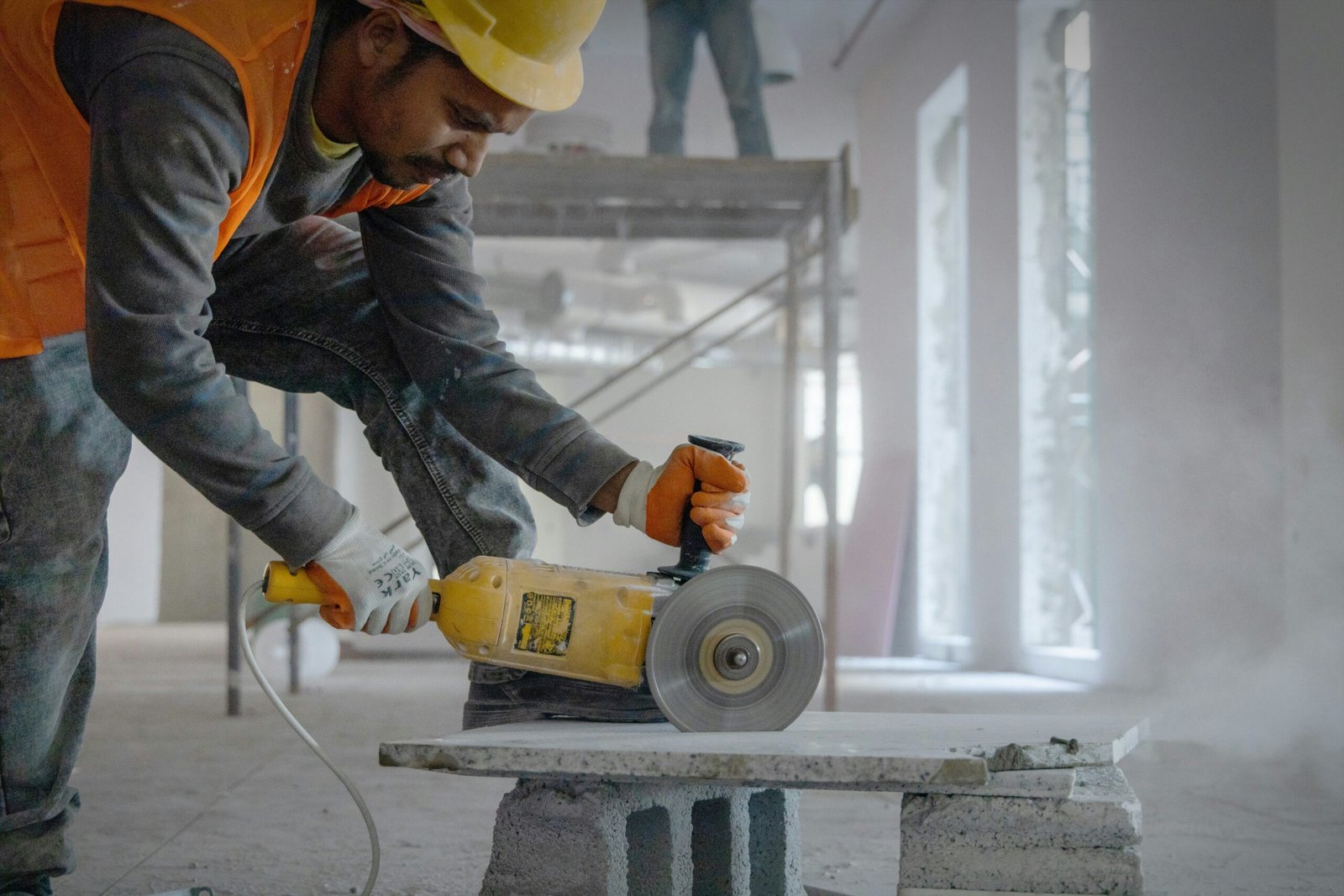
Cutting concrete is one of those jobs where the right tool can make the difference between a controlled, accurate cut and a slow, dusty struggle. An electric concrete saw is designed to handle demanding masonry work while avoiding the fuel, exhaust, and engine maintenance associated with many gas-powered models. Depending on the design, an electric saw can be used for cutting slabs, pavers, concrete blocks, masonry, brick, and other mineral-based materials.
But the biggest saw isn’t necessarily the most effective one to buy. The diameter of the blade, cut depth, motor power, if it’s wet capable or air powered, how easily you can transport it, where your electricity is or if air is readily available, how well dust is handled and, of course, what you’re cutting are all factors in whether a particular saw is a good fit. Another concern is what everyone seems to conveniently ignore or not mention–respirable crystalline silica.
OSHA has it, you know, that carving and sawing concrete, stone, other silicon-containing materials is a source of respirable silica exposure that causes long-term health problems.
Knowing your equipment and hazards first will result in the appropriate choice and a predictable cut.
What Is an Electric Concrete Saw?
An electric concrete saw is a powered cutting tool that uses an electric motor to rotate a specialized abrasive or diamond blade at high speed. The blade is made to cut solid substances such as concrete, mortar and concrete products, brick, block and can sometimes be used with asphalt depending on the saw. A masonry-cutting type tool uses it because the materials wear through much more difficult and much hotter than woodworking applications. Hand-held as walk-behind and walk-through variations.
The basic operation is straightforward:
- The motor supplies rotational power.
- The blade transfers that power to the cutting surface.
- Diamond segments or another appropriate cutting edge gradually removes material.
- The operator guides the blade along the marked cutting line.
- Water or a dust-collection system may control heat and airborne particles.
The exact design matters because a small handheld unit and a walk-behind concrete cutter serve very different purposes.
For example, a homeowner cutting a few concrete pavers may need portability more than extreme cutting depth. A contractor cutting expansion joints across a large slab may benefit from a walk-behind machine with greater depth control and a larger blade.
How Does an Electric Concrete Saw Cut Through Concrete?
Concrete is hard as there are bits of sand and crushed rock surrounded by a concrete paste which is quite hard. The normal type of metal blade that cuts wood generally will not stand up to this amount of hardness and abrasiveness. Diamond blades is commonly used, as when the diamond is exposed they are abrasive and will wear away the hard masonry of which the piece of material consist while the blade rotates against it, unlike a wood saw which is normally made to saw though not to wear away hard material.
Several factors influence cutting performance:
Blade type
The blade must be rated for the material. A blade designed for concrete may not be the right choice for asphalt, brick, reinforced concrete, or other specialized materials.
Blade diameter
Larger blades generally allow deeper cuts, assuming the saw is designed to accommodate them. The maximum cutting depth is determined by the machine’s specifications rather than blade diameter alone.
Motor capacity
A stronger motor can maintain blade speed more effectively under heavy load, but motor power is only one part of performance. Blade quality, material hardness, cutting technique, and cooling all matter.
Cutting speed
Pushing the saw aggressively can overload the motor and blade. Allowing the cutting system to work at an appropriate feed rate usually produces a more controlled result.
Electric vs. Gas-Powered Concrete Saws
Selecting an electric or gas powered tool hinges a great deal on where it is used. For some indoor and/or house work, an electric unit may be appealing for reasons such as an absence of engine emissions, quick starting power and no necessity for gas and oil mix, no carburetors or engine storing. Gas equipment offers more independence of power outlets and can be more suitable for large jobs away from a power source and are ideal where both a constant supply and portability are an advantage.
| Feature | Electric model | Gas-powered model |
| Power source | Electrical supply | Gasoline |
| Exhaust | No engine exhaust | Produces engine exhaust |
| Indoor suitability | Often more practical, subject to dust and electrical controls | Generally less suitable because of exhaust |
| Startup | Usually simple | Engine starting required |
| Fuel maintenance | None | Required |
| Portability | Limited by cord unless battery-powered | High |
| Noise and vibration | Varies by model | Often higher |
| Large outdoor work | Depends on electrical access and machine | Often advantageous |
But, electric equipment is not inherently safer. There are hazards associated with electricity itself as well as water; broken power cords; improper extension cords; and wet surroundings. Work on the machine should always be guided by the specific machine manufacturers’ procedures and appropriate workplace safety standards.
Choosing the Right Electric Concrete Saw
The best machine is the one that matches the actual cutting job rather than the one with the most impressive specifications.
Start with the required cutting depth
Decide how deeply it has to cut before deciding on a machine, the saw which cuts only an inch along the surface might fail miserably for cutting a substantial slab.
Don’t think of taking an over-size blade over the small machine, the size must stay within the specifications prescribed by the manufacturer.
Consider handheld vs. walk-behind designs
Handheld model-This is appropriate when mobility and access are issues. Handy for small cuts, repairs, openings, stonework and cutting a hole in something where a full-sized machine wouldn’t work as well. Walk-behind model- This unit works well forlong-straighter cutting job on slabs and pavement. In this situation the machine can walk while I still carry no weight other than my tools and some of the concrete dust!
Look at wet-cutting capability
Water is most beneficial during concrete cutting; it helps control the temperature of the blade while keeping concrete cutting dust out of the air. OSHA states that water applied directly to the saw blade has proven highly effective in dramatically minimizing dust generated during cutting of materials that contain crystalline silica. There is defined control required for handheld power saws per the OSHA Silica standard for construction; built-in water systems that provide constant application of water to the blade using Table 1 criteria.
Check electrical requirements
If you are buying or renting a corded version of this saw, make sure you know what voltage and amperage required are, what the plug looks like, and that you have proper power source at the jobsite. You could have voltage drop if an extension cord is too light. Voltage drop also has to be compensated by the saw itself, that could also lead to a tool’s inferior work or over-heating.
Outdoor conditions, especially wet ones, must be accompanied byproper electrical safety.
Please never forget water and electricity have a very precarious relationship even though the saw is described to work in water. Water delivery system and its protected connections and jobsite wiring system, need appropriate electrical safety procedures.
Wet Cutting vs. Dry Cutting
One of the biggest decisions in concrete sawing is whether to cut wet or dry.
Wet cutting
Water is added to near the blade during the wet cut. Two big benefit from wet cutting-dust suppression and blade cooling. OSHA says if a wet cutting method is used to control silica exposure it should add enough water so that visible dust is not produced from wet cutting.
When working, water can also reduce the heat buildup in the saw.
As stated by OSHA, a wet saw can cause less heat build up in masonry cuts and decrease the chance of blade portions breaking off from the saw.
The downside is cleanup. Water creates slurry that must be controlled and removed properly.
Dry cutting
Whiledry cuttingmight be applicable on a job using properly designed equipment and dust control; just removing the water does not make it safe.
Concrete can also produce respirable crystalline silica and OSH A states covered construction works should use suitable engineering and work practice controls.
If wet cutting is not feasible, a suitable dust extraction system or other control might be needed, and respirators should not be used as your primary line of defense while engineering controls are an option.
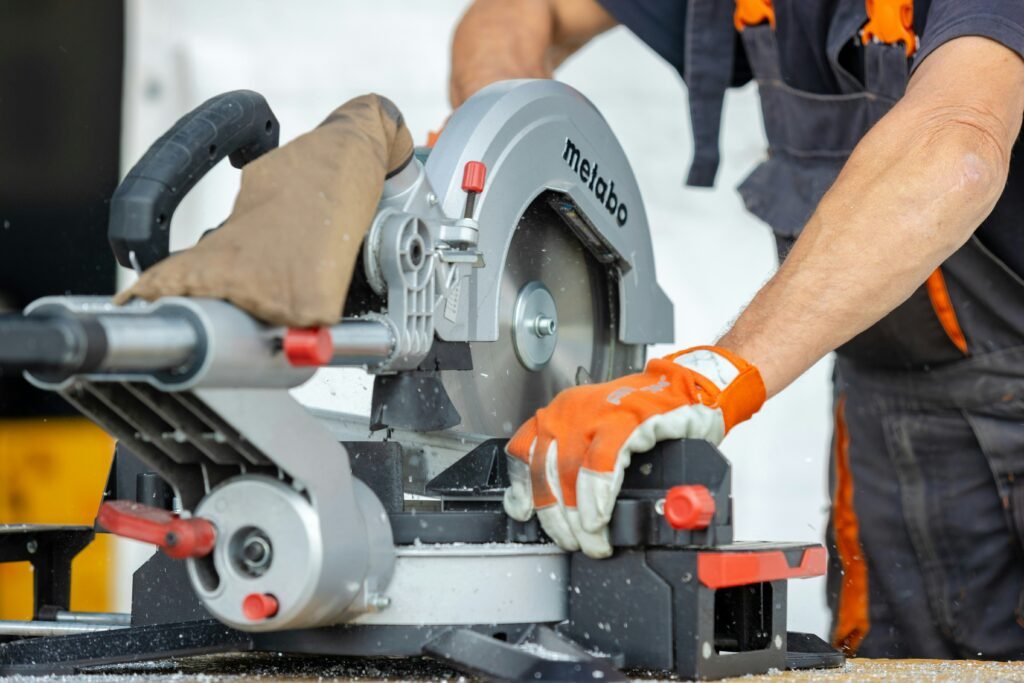
How to Use an Electric Concrete Saw Safely
A controlled cutting process begins before the blade touches the concrete.
1. Inspect the saw
Check the blade, guard, power cord, switches, water connections, and other components specified by the manufacturer.
Do not operate equipment with damaged electrical insulation, missing guards, loose components, or a blade that is unsuitable for the material.
2. Inspect the cutting area
Determine what is underneath or behind the concrete before cutting. A slab can contain electrical conduits, plumbing, reinforcement, post-tensioning components, or other embedded elements.
A cutting line that looks simple from the surface can conceal infrastructure below it.
3. Mark the cut
Use a clear, accurate line and position yourself so you can maintain control without standing directly in the path of potential debris.
For long cuts, a guide or suitable cutting system can improve consistency.
4. Set up dust control
Install the water supply prior to starting any cuts when utilizing wet-cut saws. Insure that the water is appropriately channeled by the manufacturer to the blade.
Confirm that the saw, shroud, hose and vacuum are matched when using a dust-collection system.
OSHA advocates the use of engineering methods like wet-cutting, as well as local exhaust ventilation, to address silica exposure.
5. Start the saw correctly
Allow the blade to reach its intended operating condition according to the manufacturer’s instructions before beginning the cut.
Do not force the blade into the concrete.
6. Let the blade do the work
Apply controlled pressure and maintain a steady movement. Excessive force can slow the blade, increase heat, overload the motor, and make the saw harder to control.
If the saw begins behaving differently, stop and investigate rather than simply pushing harder.
7. Complete the cut carefully
As the blade approaches the end of a cut, maintain control. Do not twist the blade sideways or use the saw as a pry bar.
After the blade stops, follow the manufacturer’s instructions before setting the tool down or performing maintenance.
Dust and Silica Safety Deserve Special Attention
Cutting concrete requires the wearer to be more than just in the line of dust.
Respirable crystalline silica are very fine particles which can become airborne during the cutting, grinding, boring and crushing of concrete, stone, brick andmortar. OSHA links occupational exposure to a wide variety of health problems including COPD, silicosis, lung cancer and kidney disease.
OSHA’s standard applies to covered construction work and imposes the duty on employers to limit employee exposures to respirable crystalline silica and establishes alternative methods to use during certain everyday construction tasks.
Good dust control can include:
- Water delivered directly to the blade
- Local exhaust ventilation
- Compatible dust shrouds and HEPA-filtered vacuum systems where appropriate
- Adequate ventilation
- Proper respiratory protection when required
- Wet cleanup or HEPA-filtered vacuuming rather than unnecessary dry sweeping
OSHA prohbits dust sweeping and dry brushing where silica exposure can be introduced to the air unless safer methods are unfeasible. Dry sweeping or brushing and the use of compressed air can also be limited under specific criteria to clean surfaces contaminated with silica. Visible dust absence does not prove the absence of respirable particles in the air.
Common Mistakes to Avoid
Even an appropriate saw can perform poorly when it is used incorrectly.
Using the wrong blade
A blade intended for one material may cut poorly, wear rapidly, or create unnecessary stress when used on another.
Always match the blade to the material and machine.
Forcing the blade
Heavy pressure is not a substitute for proper blade selection. If cutting feels unusually difficult, inspect the blade, cutting depth, material, and machine rather than simply applying more force.
Cutting without adequate dust control
A cloud of concrete dust is not a normal inconvenience to ignore. Silica exposure is a serious occupational hazard, and controls should be established before cutting begins.
Ignoring blade condition
A worn or damaged blade can reduce cutting efficiency and increase the effort required from the operator and machine.
Using an inappropriate power setup
A powerful saw connected through an unsuitable electrical arrangement can create problems before cutting even starts. Follow the manufacturer’s requirements for power supply, extension cords, grounding, and electrical protection.
Dry sweeping afterward
Cleaning up the dust incorrectly can put particles back into the air after the cutting itself is finished. OSHA recommends methods such as wet sweeping or HEPA-filtered vacuuming when feasible.
When a Handheld Model Isn’t the Right Choice
A handheld saw is versatile, but versatility has limits.
A larger cutting machine may be a better choice when the job involves:
- Long, repeated slab cuts
- Significant cutting depth
- Large areas of pavement
- Consistent straight-line work
- Extended professional use
- Reduced physical handling of the cutting machine
A hand-held saw may be sufficient for small repair jobs. However, for production cutting, specialized machinery capable of extended work on slabs can be more beneficial and wear on the operators will be lessened.
The nature of the material being cut is also capable of altering the solution: Reinforced concrete, thick slabs of structure, asphalt, or very hard, aggressive aggregates will also dictate certain equipment and blade selections.
What About Cutting Concrete Indoors?
Planning is especially important during indoor cutting since the dust and fumes cannot escape as readily.
While an electric tool can take care of combustion-engine fumes it does not get rid of all of the silica particles that one may encounter. Performing a concrete operation indoors can create very dangerous dust if they are not using adequate controls and practices for indoor dust conditions.
OSHA’s rules regarding construction silica refer to the effects associated with an indoor, enclosed space and specifically require that an accumulation of visible airborne dust be prevented when using the designated controls.
Before cutting inside, consider:
- How dust will be controlled
- How ventilation will be maintained
- Where water and slurry will go if wet cutting is used
- How nearby workers and occupants will be protected
- Whether electrical equipment is suitable for the environment
- How the area will be cleaned afterward
For occupied buildings, controlling the work zone is especially important. Concrete dust should not simply be allowed to migrate into adjacent rooms.
Maintenance Tips for Better Performance
Regular maintenance provides predictable performance for a concrete saw and supports a reliable equipment maintenance routine. Inspect the blade and saw for damages when finished working. Clean out any accumulated slurry or debris according to the manufacturer’s recommended method of cleaning.
If your saw has a water system, make sure there are no blocked lines or fittings that decrease water flow.
If you have an electric tool, inspect the power cord often. A damaged cord is not cosmetic. Store your blades correctly and store them according to the manufacturer’s advice when it comes to installation, loosening, retightening, inspection, and replacement. If the machine starts to vibrate unusually, smell like it is burning, spark excessively, lose power or if your blade does not behave normally, take the machine out of service until the cause is determined.
An operated, well-maintained machine is much easier to control, but that does not mean maintenance can take up for out-of-spec operation.
When Should You Hire a Professional?
DIY concrete cutting is feasible for certain minor, well-demarcated tasks, but specific conditions demand commercial-grade tools and expertise. Employ professional concrete cutters if you’re cutting a structural member; if you need to slice through a large or especially thick slab; when you have obstacles such as utility lines to contend with; for cutting super-hard, rebar-reinforced concrete; for interior concrete cutting; or when precision and volume are required. Concrete structural members should especially not be cut by amateurs since you would not know what could be inside them such as embedded or structural reinforcement or a set of water or electrical lines, the cutting of which can also ruin electrical or pipe utility line runs.
Additionally, many of these companies have the specialized dust- and fume-control systems, industrial saws, work-exposure controls, and other equipment better designed for tougher tasks and greater jobs.
Paying a contractor often makes more sense than renting tools which are not up to the task, potentially ruining the slab, and generating huge volumes of dust exposure for all.
Final Takeaway
An electric concrete saw can be an efficient solution for cutting concrete and masonry when the machine, blade, cutting method, and power supply are properly matched to the job. For many applications, wet cutting offers an important advantage because water can suppress dust and help control blade temperature. OSHA identifies wet methods and other engineering controls as key tools for reducing exposure to respirable crystalline silica during construction activities.
The optimal equipment is not the biggest and most powerful model available. Select your equipment by the intended depth of cut, the material to be cut, the overall scale of the project, whether or not you need mobility of equipment, your silica hazard control needs, and the working environment. You must first check equipment out prior to usage, use and follow the manual and not force the blade, and know your silica/electrical hazards before cutting starts. In the case of building elements, heavily reinforced material, deep cuts, or challenging indoor cuts, there might be professional equipment/contractors the best path.
Frequently Asked Questions About an Electric Concrete Saw
1. What is an electric concrete saw used for?
An electric concrete saw is designed to cut hard materials such as concrete, masonry, brick, blocks, pavers, and other compatible construction materials. Depending on the model and blade, it can be used for shallow repair cuts, slab work, openings, pavement, and other masonry applications.
2. Is wet cutting better than dry cutting concrete?
Wet cutting is often preferred because continuously applying water to the blade can reduce airborne silica dust and help cool the blade. OSHA identifies integrated water delivery as a specified control method for several concrete and masonry cutting tasks.
Dry cutting can be appropriate in certain situations when an effective dust-control method is used, but simply cutting dry without controlling the resulting dust can create a significant silica exposure hazard.
3. Can you use an electric concrete saw indoors?
Yes, but indoor cutting requires careful planning. Concrete cutting can produce respirable crystalline silica, and wet cutting alone may not always keep exposure sufficiently low in enclosed areas. Additional ventilation or exhaust may be necessary.
Water and electricity also require particular attention. Use electrical protection and connections appropriate for the equipment and work environment, and always follow the manufacturer’s instructions.
4. What type of blade should be used to cut concrete?
A diamond blade designed and rated for the specific material is commonly used for concrete cutting. The correct blade depends on factors such as concrete composition, reinforcement, cutting depth, saw type, and whether the job involves wet or dry cutting.
Never assume that any diamond blade will work equally well on every concrete or masonry application. Check the blade and saw manufacturer’s specifications before installation.
5. How deep can an electric concrete saw cut?
The maximum cutting depth depends on the saw’s design, blade diameter, blade position, and manufacturer specifications. A larger blade generally allows a deeper cut, but the blade should never exceed the size or operating limits approved for the machine.
For thick slabs or structural concrete, selecting equipment based solely on maximum blade diameter may not be sufficient. The material and reinforcement also need to be considered.
6. Does cutting concrete create dangerous dust?
Yes. Cutting, sawing, grinding, and drilling concrete can generate respirable crystalline silica. OSHA states that inhalation of respirable silica can increase the risk of serious conditions including silicosis, lung cancer, COPD, and kidney disease.
That is why dust control should be planned before cutting begins. Wet methods, local exhaust ventilation, and other appropriate engineering controls can substantially reduce airborne dust.
7. How do you control dust when using a handheld concrete saw?
For applicable construction tasks, OSHA’s Table 1 specifies a saw equipped with an integrated water delivery system that continuously feeds water to the blade. The tool should also be operated and maintained according to the manufacturer’s instructions.
When wet cutting is used, make sure the water actually reaches the cutting area. Afterward, clean up slurry before it dries because dried slurry can release silica-containing dust back into the air.








