

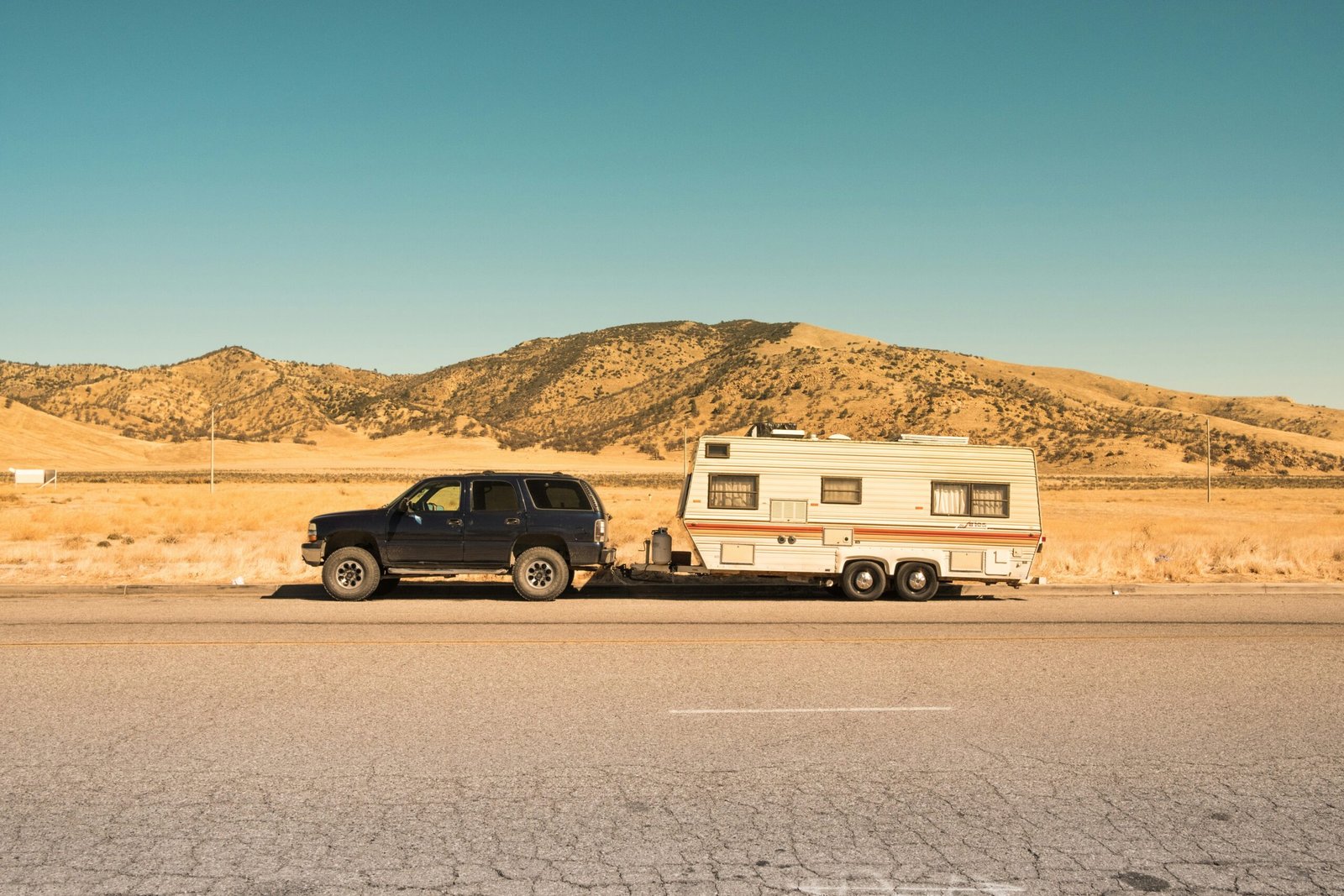
Off Grid Trailers Consider an off grid trailer if you want to be out camping, off the beaten path, not near electrical service, but still desire some of the creature comforts of home. In fact, an off grid trailer can incorporate a combination of solar power, batteries, fresh-water tanks, waste systems, insulation, kitchens, beds and off-road tires and wheels.
But purchasing one isn’t just about snagging the trailer with the largest battery pack or most menacing tread.
The right off grid trailers are the ones that have the power, water, weight, storage, climate control, and terrain capabilities to fit how you actually camp. A lightweight trailer is perfect for the weekend trip, but not for a family that plans to be off grid for a week. A large expedition trailer might have plenty of water, solar, and storage, but also need a much more powerful tow vehicle.
This article details what it means to be truly off-grid capable, how to compare specs, how long you can be truly off-grid, and what mistakes to avoid before you purchase.
What Are Off Grid Trailers?
Off grid trailers are towable camping units designed to operate for periods without relying on campground electricity, water, or sewer connections.
That usually requires several systems working together:
- Battery storage
- Solar or another charging source
- Fresh-water storage
- Wastewater management
- Cooking facilities
- Heating or cooling
- Food and equipment storage
- Appropriate towing and suspension equipment
The key word here is systems. A solar panel is not a complete answer to all your needs for a self-sufficient trailer. The capacity of your electrical system won’t do you much good if you have large water tanks.
Existing guides to buyers illustrate the far-ranging nature of these trailers. Some models focus on being small and light while others include vastly larger battery banks, solar arrays, bathrooms and living space.
Off-grid does not mean unlimited independence
No trailer can ignore resource consumption indefinitely.
Your actual camping duration is limited by some combination of:
electricity + water + wastewater capacity + fuel + food + weather + personal consumption
That is why a good buying decision starts with your trip rather than a product brochure.
Off-Grid vs. Off-Road: What’s the Difference?
The terms are often used together, but they describe different capabilities.
Off-grid capability concerns how independently the trailer can operate without hookups.
Off-road capability concerns how well the trailer can travel over rough or uneven terrain.
A trailer can be excellent at one without being exceptional at the other.
| Feature | Off-Grid Importance | Off-Road Importance |
| Solar power | High | Secondary |
| Battery capacity | High | Secondary |
| Fresh water | High | Secondary |
| Waste capacity | High | Secondary |
| Insulation | High | Secondary |
| Ground clearance | Useful | High |
| Suspension | Important | Very high |
| Chassis strength | Important | Very high |
| Tires | Important | High |
| Hitch articulation | Useful | High |
For example, an individual camping at a 300-mile inaccessible location with minimal hiking and navigation may value battery, water, and insulation higher. A person traveling cross-country with more hiking and navigation required may value suspension, clearance, tires, chassis construction, and hitch design higher.
The best off grid trailer for a given traveler will therefore be determined by where they want to go and what the camping conditions will be like.
What Makes Off Grid Trailers Actually Self-Contained?
A trailer’s ability to stay away from hookups depends on several interconnected systems.
Solar Power
While solar panels can recharge your trailer’s batteries when you’re off the grid, the amount on a solar panel box isn’t what you can expect to produce each day.
A person near the equator receives the most solar energy year round while a person in the far north or south can only get solar energy in the summer. The US Department of Energy points out that solar radiation at a location depends on season, weather and local conditions.
This means that a 600-watt solar panel will not provide equal amounts of energy each day.
The example assumptions will provide a charge rate of 8.55 c/s but various factors may influence the production to vary from 8 c/s: shade, clouds, panel orientation, temperature and system losses.
Battery Storage
The battery stores energy for later use.
This is different from solar generation.
A practical way to understand the system is to think of it this way:
Solar = energy production
Battery = energy storage
Appliances = energy consumption
If your daily use exceeds what your solar system can make up for, then the battery will eventually run flat if there isn’t another method to recharge it.
When comparing off grid trailers, don’t just compare battery amp hours. Instead, also compare system voltage, usable capacity, inverter, charging sources, load from appliances, and daily energy consumption.
Water Storage
Fresh water can determine how long you remain at a remote campsite just as easily as electricity can.
Water may be used for:
- Drinking
- Cooking
- Washing dishes
- Showering
- Hand washing
- Cleaning
More capacity in tanks offer greater potential autonomy, but water is heavy.
A 50-gallon pack weighs around 417 pounds, excluding tank, plumbing and other equipment. This must be factored in as part of the total weight of the trailer.
Which makes for a real tradeoff: more water adds mobility but also costs payload.
Gray and Black Water
Fresh water is only one part of the equation.
Gray water typically originates from sinks and showers and black water refers to a toilet waste system. Other portable trailer toilets might incorporate cassette or other systems.
Therefore, the best system of your get rid of decides the length of time you may be having from all services.
A long-way from home and carrying a big fresh-water tank but little capacity to hold your effluent?
How Long Can Off Grid Trailers Stay Without Hookups?
There is no universal number of days.
A couple using electricity conservatively and taking short showers may have a very different experience from a family running multiple appliances and using substantial amounts of water.
Consider these resource limits:
| Resource | What Can Drain It? | What Affects Duration? |
| Battery | Appliances, electronics, lighting | Daily electricity use |
| Solar | Cloudy or shaded conditions | Sunlight and system size |
| Fresh water | Drinking, showers, washing | Number of occupants and habits |
| Gray tank | Showers and sinks | Water consumption |
| Black tank | Toilet use | Occupancy and toilet system |
| Propane/fuel | Heating and cooking | Weather and appliance use |
| Food | Normal consumption | Number of people and trip length |
This means the practical question isn’t simply, “How many days can this trailer last?”
Instead ask:
Which resource will run out first?
That is your real limiting factor.
For example, a trailer may have plenty of battery capacity but insufficient fresh water for a long stay. Another may have plenty of water but need additional charging after several cloudy days.
How Much Solar Power and Battery Capacity Do You Need?
There isn’t one correct power configuration for every camper.
Start by estimating your daily electrical consumption.
Consider how often you’ll use:
- Refrigerator
- Lights
- Water pump
- Phones
- Laptop
- Television
- Microwave
- Coffee maker
- Fan
- Air conditioner
- Electric heater
A person who primarily uses lights, a refrigerator, a water pump, and small electronics will have very different requirements from someone who expects to run air conditioning for long periods.
A simple planning method
Use this sequence:
1. Estimate daily consumption.
2. Determine how much battery storage provides an appropriate reserve.
3. Estimate how much solar generation is realistic for your camping location and season.
4. Consider another charging source for periods when solar production is insufficient.
The advantage of this, as opposed to selecting a trailer of your own, is that the solar specification is simply greater than a different design.
DOE: there’s more to a photovoltaic cell than we’ve covered, such as: Some of the light that arrives at a solar cell cannot be converted into usable electrical power.
Understanding Trailer Weight Before You Buy
Weight is one of the most important parts of choosing off grid trailers, particularly if you’re planning to travel with water, batteries, food, recovery equipment, bikes, outdoor gear, or other accessories.
Important terms include:
Dry or unloaded weight: The trailer’s weight in a specified unloaded configuration.
GVWR: The maximum allowable loaded weight specified by the manufacturer.
Payload or cargo capacity: The amount of additional weight the trailer can carry within its ratings.
Tongue or hitch weight: The portion of trailer weight transferred to the tow vehicle.
The critical mistake is assuming the advertised dry weight is the weight you’ll actually tow, so review safe trailer towing guidelines before loading.
Your camping load might include:
- Fresh water
- Propane
- Batteries
- Food
- Clothing
- Cooking equipment
- Tools
- Recovery gear
- Outdoor equipment
- Spare parts
- Optional accessories
The total can be substantially higher than the empty configuration.
Alberta’s recreational-vehicle towing guidance specifically emphasizes manufacturer ratings, payload, axle ratings, hitch ratings, and combined weight limits when determining towing capability.
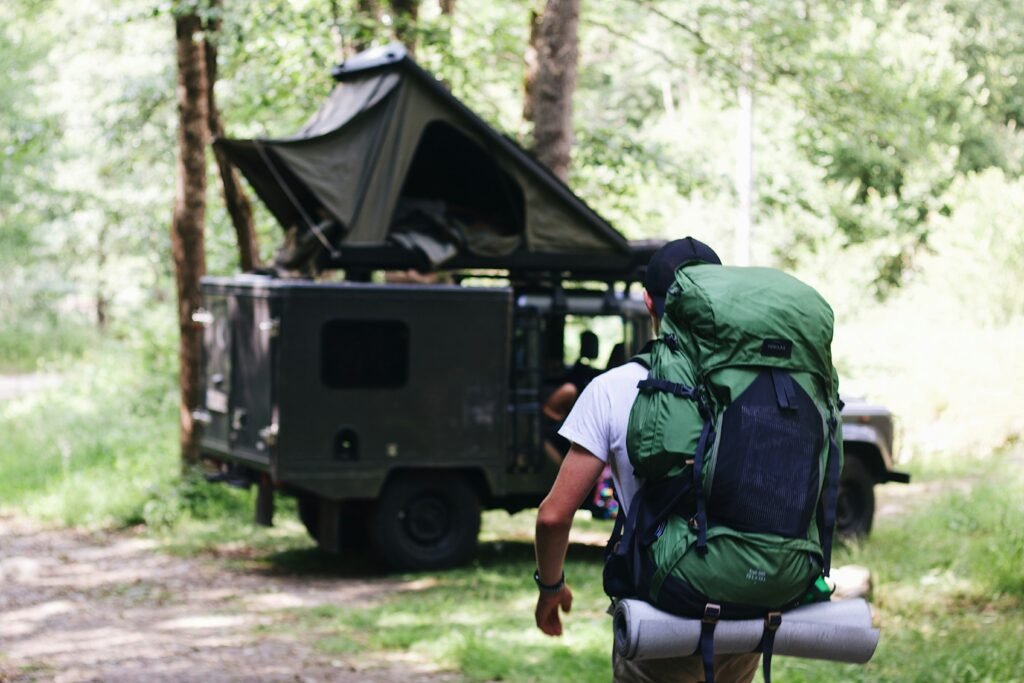
Can an SUV Tow Off Grid Trailers?
Some lightweight off grid trailers can be compatible with SUVs, but that should never be assumed from the trailer’s empty weight alone.
Check the actual ratings for both the vehicle and trailer.
Important factors include:
- Vehicle tow rating
- Vehicle payload
- Gross combined weight rating
- Hitch rating
- Trailer GVWR
- Actual loaded trailer weight
- Tongue weight
- Braking equipment
- Tire ratings
11 Road Trippers points out a few off-grid trailers designed for use with SUVs but the utility of the individual trailer still has to be matched to the tow vehicle.
Alberta’s provincial guidance also suggests looking at the trailer’s requirements in terms of Towing and weight, and that the hitch should be appropriate to the trailer weight. Alberta requires that trailers over 910kg have their own brakes.
If you are in another province or country, it’s best to check your local requirements instead of assuming Alberta’s.
Suspension, Ground Clearance, and Off-Road Capability
If your camping route includes rough roads, the trailer’s mechanical design becomes much more important.
Look at:
Ground clearance
More clearance can help reduce the risk of contacting obstacles underneath the trailer, but clearance alone doesn’t determine trail capability.
Suspension
Independent or specialized suspension systems can be designed to provide additional wheel movement and help maintain contact over uneven surfaces.
Tires
Tire construction, load rating, tread, and intended terrain all matter.
Hitch design
A trailer intended for uneven terrain may require greater articulation than a conventional campground trailer.
Chassis construction
[Repeated impacts and vibration can impose additional stresses on a trailer.
According to the buyer’s guide at Expedition Portal, a purpose-built off-road trailer is designed around the conditions encountered during rough travel on trips distant from any form of infrastructure.
Nevertheless, be aware that purchasers should separate manufacturer capability claims from third party testing or owner experiences.
Insulation, Heating, and Cooling Matter More Than They Seem
Remote camping isn’t always about warm-weather adventures.
Climate can significantly change your resource requirements.
In cold conditions, heating becomes important, while hot-weather camping can increase cooling and ventilation needs.
Good insulation can help manage interior temperatures and reduce the workload placed on heating or cooling systems through effective RV insulation practices.
When evaluating off grid trailers, look beyond a phrase such as “four-season.”
Ask what that claim actually includes:
- Wall and roof insulation
- Floor insulation
- Window construction
- Heating system
- Plumbing protection
- Ventilation
- Condensation management
- Cold-weather operating information
Likewise, an air conditioner that works well at a campground may require substantial electrical energy when operated away from hookups.
Off Grid Trailers Calgary Buyers Should Consider
If you’re researching Off Grid Trailers Calgary options, the same technical principles apply, but climate and travel conditions deserve additional attention.
Before choosing a trailer for use around Calgary or longer trips through Western Canada, consider:
- Cold-weather insulation
- Heating requirements
- Winter storage
- Battery performance in cold temperatures
- Fresh-water and plumbing protection
- Trailer weight
- Tow-vehicle capability
- Tire selection
- Seasonal road conditions
Pre-trip inspection and trailer check guidelines What does Alberta’s official vehicle guidance advise? Alberta’s official guidance on vehicles suggests a pre-trip checklist, as well as ensuring the towing and weight requirements are checked before setting off with a recreational trailer.
For consumers buying a local trailer, the “off-grid” trailer isn’t necessarily all season or all routes. Get the details from the seller, including configuration, current specs, any extras, and what Cold Weather capabilities the trailer has.
How to Choose Off Grid Trailers for Different Camping Styles
The best trailer depends heavily on how you intend to use it.
Weekend couples
A compact trailer may make more sense when trips are short and water and electricity requirements are modest.
Prioritize:
- Easy towing
- Simple setup
- Comfortable sleeping
- Basic solar/battery capacity
- Storage
Families
Families generally consume more water, create more wastewater, carry more equipment, and need additional sleeping and storage space.
Prioritize:
- Sleeping capacity
- Fresh-water capacity
- Waste capacity
- Storage
- Refrigerator capacity
- Payload
Remote workers
Someone working from a campsite may have much higher electrical and connectivity requirements than a recreational camper.
Prioritize:
- Battery capacity
- Solar generation
- Reliable charging options
- Workspace
- Connectivity equipment
- Weather protection
Overlanders
Travelers covering rough terrain may need stronger emphasis on mechanical capability.
Prioritize:
- Suspension
- Ground clearance
- Tires
- Chassis
- Hitch articulation
- Underbody protection
- Recovery planning
The most useful off grid trailers are therefore not necessarily the largest or most expensive. They’re the ones that solve the actual problems your trips create.
New vs. Used Off Grid Trailers
Buying new isn’t the only option.
A used trailer can sometimes provide a practical way to obtain an established setup, but proper trailer maintenance and inspection become especially important.
Check:
- Frame condition
- Suspension
- Tires
- Brakes
- Bearings
- Roof and seals
- Water system
- Battery health
- Solar wiring
- Inverter
- Appliances
- Signs of moisture
- Previous modifications
Ask for maintenance records where available.
A used trailer with an older battery system may have significantly different real-world capability from its original specification.
Common Mistakes to Avoid
Choosing by appearance
Rugged styling does not tell you how much water or electrical capacity the trailer has.
Comparing only solar wattage
Solar capacity should be considered alongside battery storage and actual daily consumption.
Ignoring water weight
A large tank adds useful capacity but also adds substantial payload.
Confusing off-road with off-grid
A trailer can handle rough roads without having enough resources for extended camping away from hookups.
Buying before checking the tow vehicle
Always compare the trailer’s loaded weight and hitch requirements with the vehicle’s manufacturer ratings.
Assuming marketing terms are specifications
Words such as “four-season,” “self-contained,” and “off-road ready” should lead to more questions, not fewer.
Forgetting maintenance
Remote travel makes mechanical and electrical reliability more important because professional help may be far away.
What Should You Check Before Buying Off Grid Trailers?
Before making your final decision, prepare a simple comparison sheet to evaluate the options.
| Category | Questions to Ask |
| Power | How large is the battery? How much solar is included? |
| Charging | Is there vehicle or shore charging? |
| Water | How much fresh water is available? |
| Waste | What are the gray/black tank or cassette options? |
| Weight | What are the unloaded weight and GVWR? |
| Payload | How much gear can you legally carry? |
| Towing | Is my vehicle rated for the loaded trailer? |
| Suspension | What terrain is it designed for? |
| Clearance | What are the actual ground-clearance specifications? |
| Climate | What insulation and heating systems are included? |
| Maintenance | Are replacement parts and service accessible? |
| Warranty | What is included in the coverage, and how long does it last? |
For current models, verify these figures directly with the manufacturer or authorized seller because equipment packages, model years, options, prices, and specifications can change.
When Professional Advice Makes Sense
Most buyers can compare basic specifications themselves, but professional input can be valuable when the setup becomes complicated.
Consider consulting a qualified trailer technician or experienced towing professional if you’re dealing with:
- A trailer close to your vehicle’s maximum rating
- Significant suspension modifications
- Complex electrical upgrades
- Large battery systems
- Custom towing configurations
- Serious off-road travel
- Used trailers with questionable modifications
- Brake or axle concerns
This is especially important when a mistake could affect towing safety.
Alberta’s official guidance emphasizes staying within manufacturer GVWR, GAWR, hitch, tire, and combined-weight ratings rather than assuming modifications increase the vehicle’s rated capacity.
Frequently Asked Questions:
1.What are off grid trailers?
What is an Off grid trailers? An off grid trailer is a tow-able camping unit built to run without traditional hookups in a campsite. Off grid trailers generally include battery storage, solar charging, water holding, waste, stove and climate control.
2.Are off grid trailers the same as off-road trailers?
No. Off-grid describes resource independence, while off-road describes terrain capability. Some trailers are designed for both, but one capability does not automatically guarantee the other.
3.How long can an off-grid trailer stay without hookups?
There is no universal number. Duration depends on battery capacity, solar production, water, wastewater, fuel, weather, appliance use, and the number of people camping.
4.How much solar power do I need for an off-grid trailer?
It depends on your daily energy use and the solar availability at where you camp. Begin by estimating your expected power use, then compare battery storage and actual solar output rather than purchasing a panel size to be able to compare “apples.”
5.Can I tow an off-grid trailer with an SUV?
Some lightweight models can be towed by SUVs, but compatibility depends on the specific trailer’s loaded weight, GVWR, tongue weight, hitch requirements, and your vehicle’s towing and payload ratings.
6.Are off-grid trailers good for winter camping?
Some are designed with insulation, heating, and plumbing protection for colder conditions, but “four-season” or similar marketing language should be verified against the actual equipment and operating specifications.
7.What should I prioritize when buying an off-grid trailer?
Begin by identifying what is most important to you based on your real-world camping experiences. Short trips may prioritize ease of towing and minimal power needs. Long remote campouts may place higher value on water capacity, battery bank size, solar input, waste capacity, climate control, payload and maintainability.
Conclusion
The best off grid trailers aren’t about any single impressive spec. Their functionality is about how the sum of the parts: power, solar charging, water, waste, insulation, storage, hitch capacity, suspension, and where you’ll actually camp.
Know before you buy…how many will be traveling with you; how long do you stay away from hookups; what appliances will you be running; how much water will you use; what kind of ground will you be on; what can your tow vehicle pull safely?
When looking at off grid trailers in Calgary or anywhere else, always double-check the specs for the exact configuration you are looking at and make sure you are aware of their cold weather specs, loaded weight, and rated to pull rating.
The most critical mistake you can make is to purchase based on a long feature list. Select your trailer based on the trip you truly plan to make. That way, it’s much simpler to find the off grid trailers that will work for you and avoid one you don’t need or find out too late that you overlooked a major limitation.








