

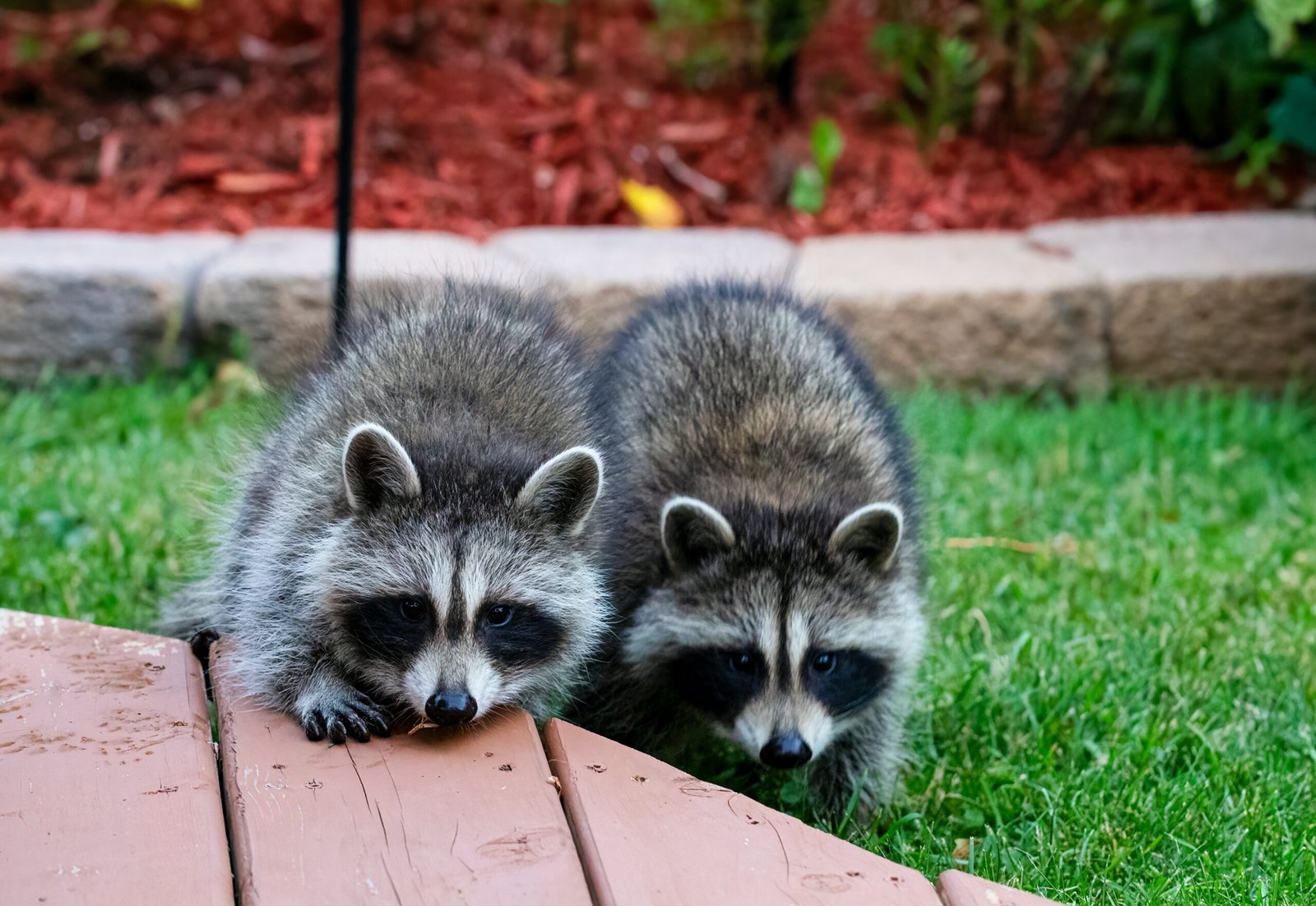
They may transform your otherwise peaceful backyard into a nightly trek to an overturned trash can, a wrecked garden, a ruffled yard, or activity around a deck or shed. Fortunately, you typically don’t have to use one pungent product or an elaborate concoction. You simply have to make your property less desirable and less inviting.
If you are wondering how to keep raccoons out of your yard, Begin at the beginning: take away food that is not locked away, ensure your garbage and compost are secured, eliminate potential shelter, protect exposed areas and seal any gaps around structures. Ultrasonic devices may also work – but don’t assume they can be a substitute for exclusion.
Raccoons are a relatively adaptable omnivorous species with behaviors shaped by urban wildlife ecology. They are sure to find what they need in a residential yard – food, water and a resting site or den. University and wildlife-management information strongly recommend removal of attractants and exclusion as tactics for raccoon control.
Why Raccoons Keep Coming Into Your Yard
Before deciding how to keep raccoons out of your yard, it helps to understand why they are visiting in the first place. Removing the reason they return is generally more useful than repeatedly trying to scare them away.
Easy Access to Food
Garbage, compost, pet food, birdseed, fallen fruit, nuts, and produce in the garden are also potential foods for raccoons. In residential areas, pet food set out overnight is a significant food source.
Your yard may seem spotless but still provides raccoons with abundant snacks. Even tiny leftover portions of spilled birdseed, for example, or food dropped on the ground near a trash container can attract repeat visits.
Water Sources
Water sources such as pet bowls, ponds, birdbaths and other sources of water can also attract wildlife to a property where food and shelter are also present.
It’s not necessary to get rid of all water features. Think about whether there is an accessible water supply that might be fueling your raccoon problem.
Shelter and Hiding Places
Raccoons can use spaces beneath decks, porches, sheds, woodpiles, brush piles, crawl spaces, attics, and chimneys as shelter or den sites.
That means how to keep raccoons out of your yard is not only a food-management problem. It can also become an exclusion problem when animals begin using a structure on the property.
How to Keep Raccoons Out of Your Yard
The best strategy is to address the strongest attractants first and then improve physical barriers through effective wildlife management. Work through the following steps rather than trying several random repellents at once.
1. Secure Garbage and Compost
An uncovered trash can might be too tempting for a raccoon to resist for a midnight snack. Get a trash container with a snug-fitting lid and secure the lid if needed to prevent it from being knocked over.
Keep garbage containers in a garage, shed, or other enclosure if you can. Wildlife-management advice also suggested to secure loose lids, or secure trash containers against tipping over.
Retain compost inedible too. Lush, food-full compost can bring in raccoons as well as various scavengers.
Practical example: If you notice the raccoon activity is near your garbage cans, then locking up the garbage will likely be more effective than using a scent deterrent in the rest of your yard.
2. Remove Outdoor Food Sources
One of the simplest answers to how to keep raccoons out of your yard naturally is to stop providing easy meals.
Bring in pet food at night. Remove fallen nuts and fruit, pick up spilled birdseed and don’t leave any food scraps around your outdoor picnic table.
Refrain from purposely feeding raccoons. Providing food can condition the wild animals to your landscape as a reliable food supply, causing more visits.
3. Make Bird Feeders Harder to Raid
Bird Feeders Can Be Raccoon Food Raccoons will consume birdseed, especially if it’s spilled on the ground in large quantities.
Feeder Assembly Use a feeder setup that minimizes spillage and makes feeding difficult for mammals. Clean the area under and around the feeders frequently; do not allow seed to accumulate.
If raccoons are visiting consistently because of a feeder, it might be wise to remove the feeder during this time while you see about removing the bigger issue.
4. Protect Your Garden and Lawn
Plants There is food and soft soil that the coon can look around to in the gardens. Use an solid mesh barrier or fencing to shield any of the beds and gardens that are susceptible.
Raccoons might also dig up lawns while foraging for insects and grubs. Lawn damage is not proof of raccoon activity, though; skunks are also known for this behavior and the shape of the damage can help distinguish which animal is responsible. As the University of Maryland Extension points out, raccoons generally dig up soil in rolls or chunks, while skunks leave many single cone-shaped holes.
If you think you have lawn grubs, make sure they’re really there before you treat the lawn. University advice warns against using insecticide just because animals are digging.
| Yard Problem | What to Check | Practical First Step |
| Overturned trash | Accessible food | Secure the garbage |
| Garden damage | Fruits, vegetables, soft soil | Add physical protection |
| Lifted or rolled sod | Possible grubs or insects | Inspect the affected area |
| Repeated activity under a deck | Potential shelter | Inspect before closing openings |
| Activity around bird feeders | Spilled seed | Reduce ground-level food |
| Raccoons near the roof | Branches or structural access | Inspect the route and entry points |
5. Remove Potential Shelter
Shelter: Not having many trees or shrubs sheltering your home and property can also decrease its attractiveness.
Minimize woodpiles, debris, and thick cover, where possible. Look for gaps at the base of outbuildings, sheds, decks, and porches, under crawl spaces, in retaining walls, and around doors and windows.
(sedimentation, cover, ponding) Vegetative cover requirements of selected wild species should be suitable under local conditions. UC IPM suggests habitat modification as follows: removal of potential den sites and excess cover.
Not necessarily removing every shrub or redesigning every inch of your landscape. Look for places where you have an obvious mix of cover and accessibility.

6. Block Access Under Decks, Porches, and Sheds
Don’t just chase them off, perhaps they’ll be back! If the raccoons are entering beneath a deck or shed, physical exclusion should be more reliable.
Heavy-duty mesh can be employed to cover suitable openings, but there is an important caveat: never fully block an entry point until you are certain no animals remain inside.
Much more so if there could be young raccoons around. The four S’s of raccoon damage management: exclude, suppress, trap and shoot this is to say, you cannot exclude until you know the raccoons are gone.
If there is scratching, movement or regular activity by animals from an enclosed space, consider contacting a qualified wildlife control professional rather than blocking the opening.
7. Reduce Easy Routes to the Roof
A yard problem may turn into a house problem when raccoons use trees or other objects to climb onto a roof.
Examine branches that overhang the roof and repair any damaged fascia, vents, chimney openings and other openings that provide entry. According to UC IPM, the best way to minimize roof access is to cut back overhanging tree branches and seal potential entry points.
What you’re really looking for isn’t that you keep a raccoon from ever once climbing a tree. It is that you find several paths that are easy for them to make their way from the yard to the weak spots of your house.
8. Use Motion-Activated Lights or Sprinklers as Extra Deterrents
Motion-activated lights and sprinklers can be useful as a supplementary part of how to keep raccoons out of your yard, especially when animals are repeatedly visiting one particular area.
Just remember don’t treat these devices as the long term solution on their own.
According to wildlife-management guidelines, frightening devices may have a limited effectiveness, as raccoons may learn that it is not a real threat.
Combine these traps with attractant removal and physical prevention techniques rather than relying on a trap alone.
9. Use Physical Barriers Where the Risk Is Highest
A barrier may be especially advantageous around vegetable gardens, poultry runs, ponds or newly sown turf.
Normal fencing alone may not be enough, since raccoons are excellent climbers and diggers. You may need to use special exclusion devices depending on what it is you are trying to protect.
Thinking about a non-electric fence? If you’re not using an electric fence, look for local restrictions, use the manufacturer’s safety instructions, and keep children and pets far from any non-electrified fence that is installed poorly.
How to Keep Raccoons Out of Your Yard Naturally
If you prefer a natural approach, focus first on removing the reasons raccoons visit rather than searching for a magical smell they supposedly hate.
A practical natural-prevention strategy includes:
- Bringing pet food indoors at night
- Securing trash and compost
- Cleaning up fallen fruit
- Reducing spilled birdseed
- Removing unnecessary shelter
- Protecting gardens with physical barriers
- Keeping potential building entrances secured
- Using habitat changes before relying on chemical products
This is important as tons of home remedies are being promoted on the internet with little substantial evidence that they offer reliable long-term protection. UC IPM point out that raccoons are highly adaptable to many scare devices, and that many touted home remedies have failed to be reliable.
What Works Best: Remove the Attraction Before Adding Deterrents
When deciding how to keep raccoons out of your yard, think in layers:
First: remove food rewards.
Second: secure garbage, compost, and other attractants.
Third: reduce shelter and access.
Fourth: protect gardens and other vulnerable areas.
Fifth: use motion-based deterrents as an additional measure.
Finally: monitor the property and adjust if raccoons continue returning.
This order is important because the light or sprinkler nuisance can be a trivial irritation for a hungry raccoon.
Exclusion is one of the primary means of controlling raccoon damage identified by the Internet Center for Wildlife Damage Management, while habitat modification cuts back the raccoons’ food and cover sources.
Why Raccoon Repellents May Not Solve the Problem Alone
Products and home remedies are plentiful for raccoon removal. Some use smells, tastes, light, sounds, or motion.
The difficulty is that deterrence is different from exclusion.
A deterrent might make an area uncomfortable. Exclusion is the act of denying access to a specific structure or resource. A raccoon that gains an easy meal from an open trash can may keep returning to the site even if a deterrent is installed.
Therefore, do not just assume that a more pungent product will give you a better outcome. According to research-based wildlife management publications, harassing methods usually are not sufficient for long-term exclusion.
Common Mistakes That Attract Raccoons
Some of the most preventable raccoon problems come from small habits.
Leaving Pet Food Outside
Outdoor food can become an easy nighttime reward. Bring bowls inside rather than allowing leftovers to remain outside.
Using Unsecured Trash Cans
A lid that can easily be lifted or a can that can be tipped over gives raccoons direct access to food.
Ignoring Fallen Fruit
Fruit and nuts that remain on the ground can create a recurring food source.
Leaving Birdseed on the Ground
Even if the feeder itself is protected, spilled seed can attract raccoons.
Relying on One Deterrent
A flashing light or sprinkler may not overcome a strong food incentive.
Sealing an Opening Too Quickly
Never assume an empty-looking opening is actually unoccupied. If an animal is inside, sealing it can create a bigger problem.
What If Raccoons Keep Coming Back?
If your first prevention attempt does not work, do not immediately assume you need a stronger repellent.
Work through the property again.
Check food: Is there still accessible garbage, pet food, birdseed, compost, or fallen fruit?
Check water: Is a bowl, pond, or other water source contributing to the attraction?
Check shelter: Is there an accessible space under a deck, shed, porch, or other structure?
Check access: Can raccoons climb from trees onto the roof or reach another part of the property?
Check the damage: Are you sure the animal is a raccoon? Lawn damage can be confused with skunk activity.
Add a secondary deterrent: Once the major attractants have been addressed, motion-activated equipment may provide an additional layer.
The more important question is not simply, “What methods can keep raccoons away?” It is, “What keeps making this yard worth returning to?”
Signs You May Have a Raccoon Problem
Raccoons are primarily active at night, so you may rarely see them directly, which is important when understanding nocturnal wildlife behavior.
Possible signs include:
- Overturned garbage
- Disturbed gardens
- Rolled or lifted sections of turf
- Tracks
- Droppings
- Scratching or movement around structures
- Activity near rooflines
- Damage around attic, chimney, deck, or crawl-space openings
UC IPM – Evidence of feeding, tracks, droppings, and sounds around the roof, chimney, or attic may be indicators of raccoon presence.
One night-time visit may not require an exterminator if it is not a major infestation. Prolonged activity and damage to property, or entry into a structure, should be more alarming.
When to Contact a Wildlife Professional
If the raccoons are in an attic, chimney, crawl space, or other part of a building, you may want to seek professional assistance.
Professional help can also be valuable if you suspect there is young elsewhere or when you cannot exclude the animal safely.
Do not attempt to trap, catch, or physically handle a raccoon. Raccoons may bite or scratch if they feel threatened, but wildlife professionals have the experience and equipment necessary to deal with challenging removals.
When you think animals might be inside a building or other space, make sure the space is empty before you permanently close it up. Humane World for Animals suggests waiting for animals to vacate a space before sealing the entrances.
Regulations trapping, relocating, and other wildlife control practices may be subject to restrictions in your area as well.
Humane Raccoon Prevention: What to Avoid
We should seek to limit access rather than simply kill animals for the sake of it.
Do not feed the animals, or try to personally handle a raccoon. Do not close a den or opening while animals may still be inside.
Be careful also with online recipes for putting unfamiliar materials out for children or pets. A homemade deterrent is not necessarily safe just because it’s labeled “natural.”
If an animal has entered a structure, follow humane exclusion procedures and find appropriate local help.
Seasonal Raccoon Prevention Checklist
Spring
Inspect decks, sheds, attics, chimneys, and other potential denning areas. Secure food sources before wildlife establishes a routine around your property.
Summer
Protect gardens, clean up fallen produce, and monitor lawns for unusual digging or rolled turf.
Fall
Keep garbage and compost secured as outdoor food sources change. Remove unnecessary debris and potential shelter.
Winter
Review of vulnerable areas for holes and ensure they are secure. Keep food sources out of reach as it is not meant that cold weather should slow down the animal’s activity.
It’s not uncommon for raccoons to be active in every season, but can stay within their dens a little more during extreme winter storms.
Frequently Asked Questions
1.How do I keep raccoons out of my yard naturally?
Begin by depriving animals of food and shelter, not from a smell. Keep trash and compost contained, take pet food indoors, pick up dropped fruit and spilled bird seed, and fence gardens and other potential sources.
2.What attracts raccoons to a yard?
Common attractions include garbage, pet food, birdseed, compost, fallen fruit, garden produce, water, and accessible shelter. Residential yards can provide several of these resources at once.
3.Do motion-activated sprinklers keep raccoons away?
They will discourage temporarily, but never rely on being a dependable long-term solution. Raccoons can acclimate to intimidating equipment so, when used, employ in conjunction with attracting removal and physical fencing.
4.How do I keep raccoons away from my trash cans?
Use a tightly fitting lid and secure the container so it cannot be tipped over. If possible, store trash inside a secure building. Removing food residue around the container can also help.
5.How do I stop raccoons from digging up my lawn?
First find out what they’re after. Raccoons often destroy turf in search of insects and grubs. Make sure you actually find any grubs before applying treatment to the yard, and keep in mind that skunks can create the same mess.
6.Should I seal a hole where raccoons are entering?
Trapping Only when you know there is no longer any wildlife inside. Closing up a den where animals are present can trap adults or pups inside. If you believe you have a family of animals, call upon professional wildlife help to identify the safest exclusion method.
7.What is the best way to keep raccoons from returning?
The best method is typically a combination of control methods: Remove easy sources of food, keep trash secure, reduce shelter, minimize vulnerable areas, and block entry to buildings. Deterrents can help but should not be a substitute for control.
Conclusion
Learning how to keep raccoons out of your yard starts with understanding what makes your property attractive to them. Instead of depending on one repellent, focus on the fundamentals: secure garbage, remove outdoor food, reduce shelter, protect gardens, and block access to vulnerable structures.
If the raccoons are persistent and have been coming back, check the site again to see if they’ve missed anything or found another way in. Motion-activated sprinklers and lights may help, but exclusion and habitat modification will be more effective.
The key, most importantly, humane exclusion methods. If raccoons are already INSIDE a structure, and/or young are present, or if it is not a safe option, seek qualified local wildlife assistance.
When you combine attractant removal with sensible exclusion, how to keep raccoons out of your yard becomes less about chasing animals away and more about making your property consistently less appealing and less accessible.








